What is the medical exemption certificate?
A medical exemption certificate entitles the holder to free NHS prescriptions.
Patients are entitled to a medical exemption certificate if they have a qualifying medical condition. It’s a patient’s own responsibility to check that they have a valid certificate when they claim free NHS prescriptions.
Who is eligible?
Patients are entitled to a medical exemption certificate if they have any of these conditions:
- a permanent fistula (for example, caecostomy, colostomy, laryngostomy or ileostomy) requiring continuous surgical dressing or an appliance
- epilepsy which needs continuous anticonvulsive therapy
- diabetes mellitus, except where treatment is by diet alone
- myxoedema (that is, hypothyroidism requiring thyroid hormone replacement)
- hypoparathyroidism
- diabetes insipidus or other forms of hypopituitarism
- a form of hypoadrenalism (for example, Addison’s disease) for which specific substitution therapy is essential
- myasthenia gravis
- a continuing physical disability which means they cannot go out without the help of another person
- or if they are undergoing treatment for cancer, including for the effects of cancer or the effects of current or previous cancer treatment
To apply, please speak to your doctor or GP practice.
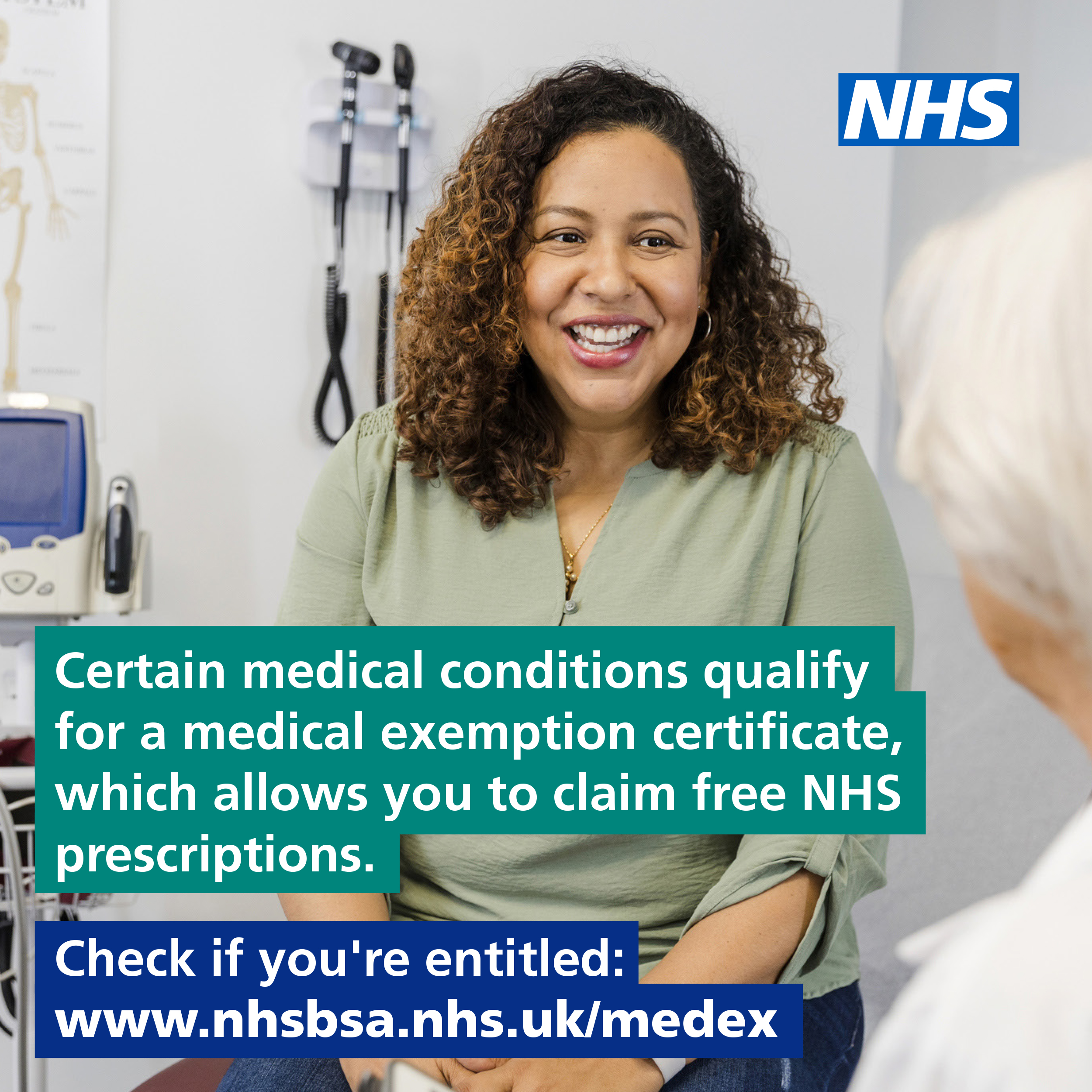
Certain medical conditions qualify for a medical exemption certificate, which allows you to claim free NHS prescriptions
Check if you are entitled: ww.nhsbsa.nhs.uk/medex